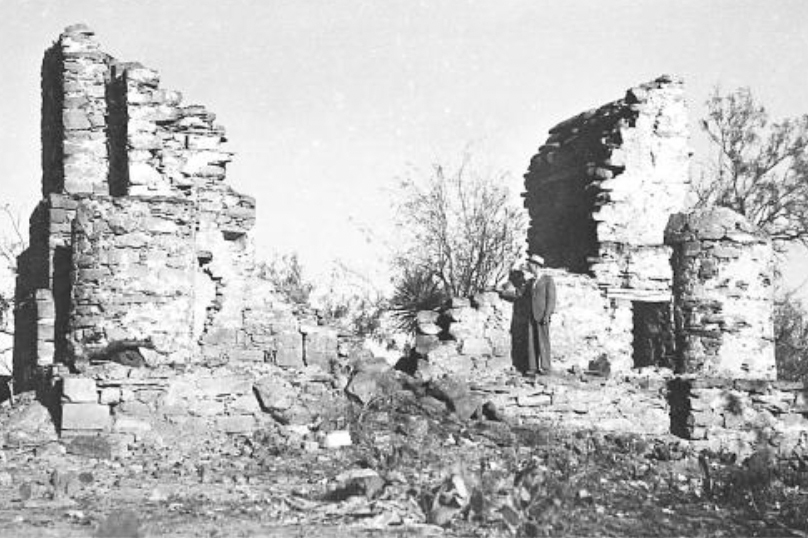
There were other houses there, of course, their foundations still scattered over the site, showing that at least five rock houses, in addition to the big houses, served the first settlers most of whom were, of course, Velas.
— Mercurio Martinez, The Kingdom of Zapata

FLAGSTONES AND FOUNDATIONS
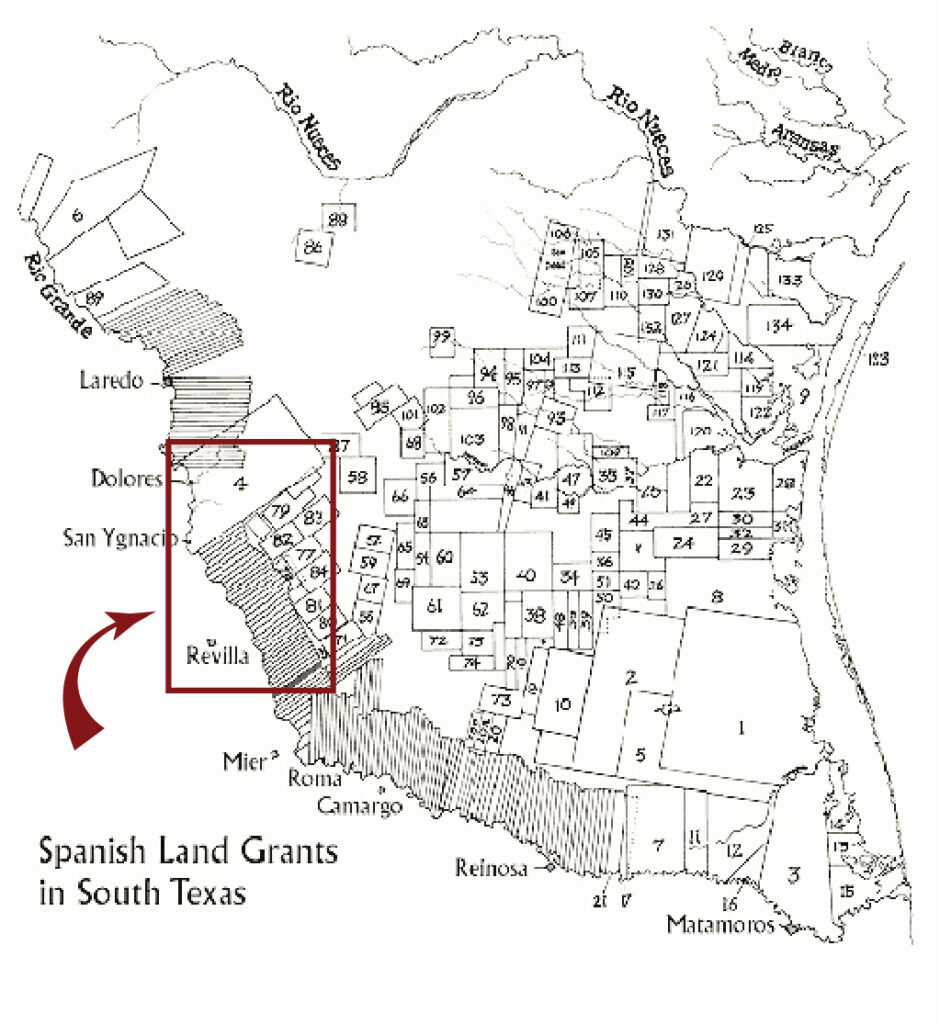
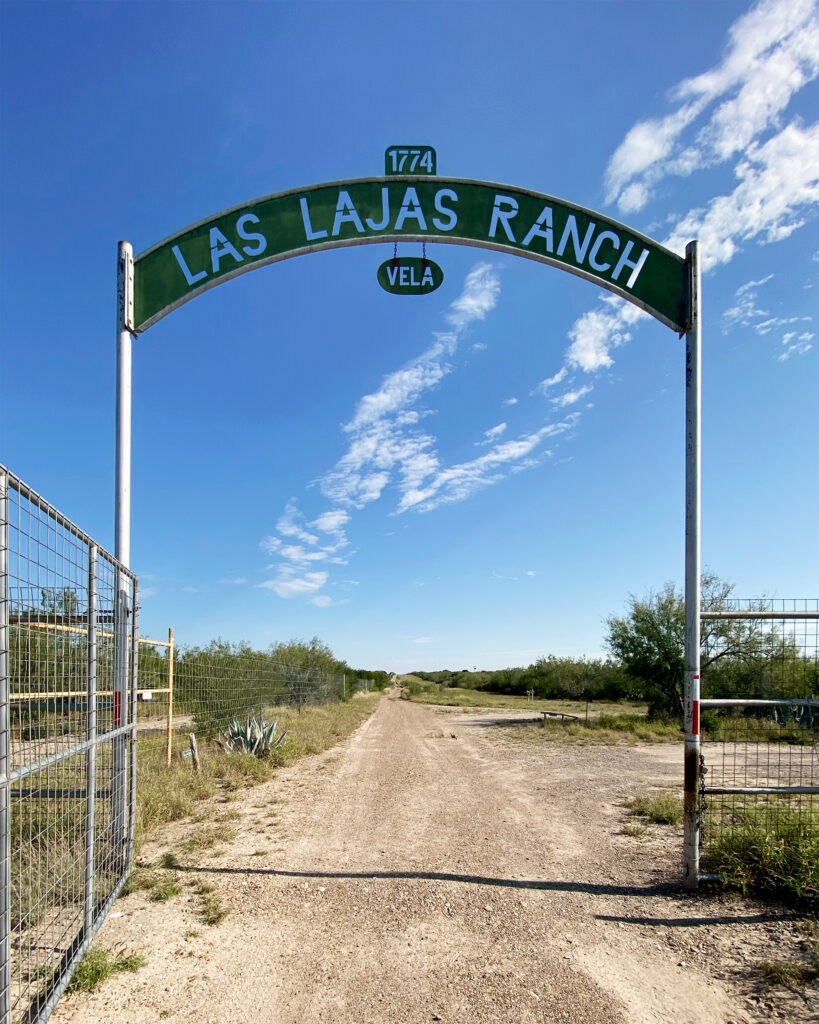
Las Lajas Ranch was founded in 1774 on Porción 29, a land grant on the Rio Grande bestowed by King Charles III of Spain upon the ranch’s founding family.
The ranch takes its name from the flat, slate-like stones, called lajas in Spanish, which surface naturally throughout the region’s caliche soils. More than a geographical feature, these flagstones were the building blocks of the original ranch compound.
DEFENDING THE FRONTIER
To secure the northern edge of its empire in the Americas, in the late 1700s the Spanish Crown issued land grants to long-established Iberian lineages with the expectation that they would settle, hold and pacify this remote frontier.
Among these was the family that would come to be known by the surname Vela — a lineage with deep roots in the Iberian Peninsula, tracing its ancestry to several great figures in Spanish history. The family founded Las Lajas Ranch on Porción 29 and assumed responsibility for cultivating and defending it against English, French, and Indigenous encroachment.
For nearly two centuries the historic ranch compound at Las Lajas stood as a stronghold on grounds that were at times violently contested. The main house was built out of locally-sourced limestone blocks, magnificent mesquite timbers, and of course lajas, and its characteristic gunports and iconic defensive towers made it a regional landmark.
Describing it as “a fortress as well as a home,” Mercurio Martinez wrote in his 1953 book The Kingdom of Zapata that a pilgrimage to the old homes of Zapata County would not have been complete without a visit to Las Lajas. That same year, however, the historic compound was lost with the creation of the Falcon Dam and International Reservoir, which submerged more than 83,000 acres of the Rio Grande Valley and forced the relocation of multiple communities.
Hover or tap on image for more information.
New Santander
Nuevo Santander, or New Santander, was a Spanish province within the Viceroyalty of New Spain that encompassed present-day Tamaulipas in Mexico and southern Texas in the United States. It was established to halt French and English encroachment, and to address indigenous raids in the northern regions of New Spain. The province was officially designated in 1746 and settlement began in 1748 with the Villas del Norte (“Villas of the North”), marking the last major area of northeastern Mexico to be conquered and occupied by Spain.
CENTURIES AND SOVEREIGNTIES
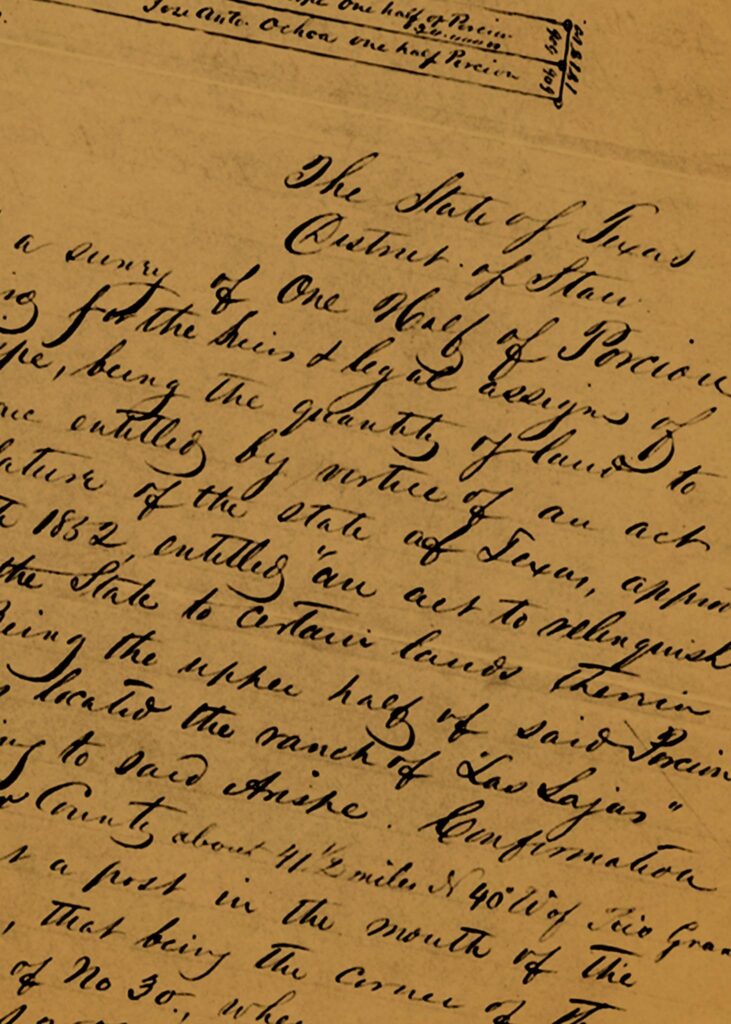
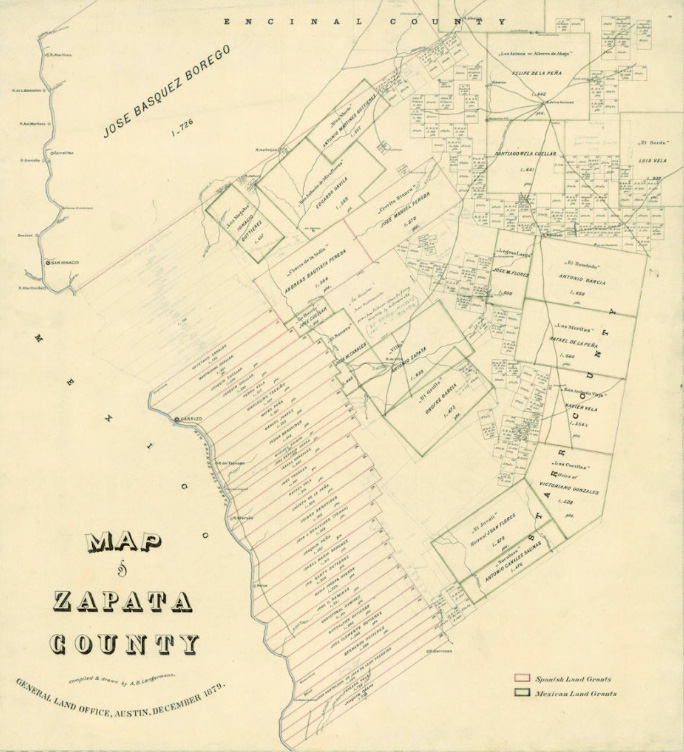
Las Lajas Ranch remains under the stewardship of its founding family to this day, just as it did through Spanish colonial rule, Mexican independence, the Republic of the Rio Grande, Texan independence, the U.S. annexation of Texas, and the ensuing Mexican-American War by which Mexico attempted to reassert its claim over Texas. At the end of the war, the United States agreed to honor legacy Spanish land grants under the Treaty of Guadalupe Hidalgo. Thus, in 1852 the Bourland-Miller Commission affirmed the legitimacy of Porción 29, and the Texas Legislature issued a patent ensuring clear title in perpetuity to the founding lineage of Las Lajas Ranch.
Below: 1852 Patent by the Texas Legislature; map showing Spanish land grants in South Texas; map showing legacy Spanish land grants in what would eventually become Zapata County, Texas.
PRINCIPLES AND PERMANENCE
Since its founding, Las Lajas has served as the family seat of generations who stood firm in moments of uncertainty, guided by duty to family and community even when history offered no simple path. One such case occurred during the Civil War.
Because the legacy ranches of the Rio Grande Valley were created under the Spanish colonial system, they were worked by their founding families with the help of hired hands rather than enslaved people, and life at Las Lajas always remained far from the plantation economy that defined much of the South. Even so, the war made neutrality impossible for South Texas ranchers, forcing each family to navigate the conflict as best it could.
Thus, in March of 1864, ranch owner Cayetano de la Garza was out riding the pastures when he spotted a Union cavalry force advancing along the Rio Grande — on the Mexican side of the river, directly across from Las Lajas Ranch. These were the First and Second Texas Cavalry Regiments, moving along the southern riverbank to avoid detection by Confederate scouts as they pushed toward the city of Laredo.
Laredo was founded in 1755 by Cayetano’s great-great-grandfather, Capt. Tomás Sanchez, and to this day is home to his descendants. It was also a strategically vital inland port, and therefore an important target for the Union. Compelled to protect his family and friends from imminent danger, Cayetano immediately mounted his horse and rode more than sixty miles to Laredo in a single day to sound the alarm.
Galloping out of those “moving clouds of sand” came an excited vaquero named Cayetano de la Garza. A relative of the colonel, he would one day be known as the Paul Revere of Laredo. Garza reported a large Union cavalry force approaching the town from downriver.
Benavides at first questioned how a force, reported to number one thousand, could get by his scouts, but De la Garza insisted that his story was true, and Benavides sounded the alarm. The Federals had managed to avoid Benavides’s guards by leaving the river road and advancing through the chaparral.
— Jerry D. Thompson, Laredo: A Pictorial History
Cayetano’s warning gave Colonel Santos Benavides enough time to rally a force of only 42 men, but this was enough for the city to repel the Union’s surprise attack in what came to be known as the Battle of Laredo. For this, Cayetano earned the nickname “the Paul Revere of Laredo.”
History is often complex, but our values are not: we believe in freedom, dignity, and the full equality of all people, and affirm without reservation that the Confederacy’s opposition to abolition was indefensible and un-American. Even so, today we honor Cayetano for the courage, selflessness, and devotion that led him to put his own life at risk in the service of his community.
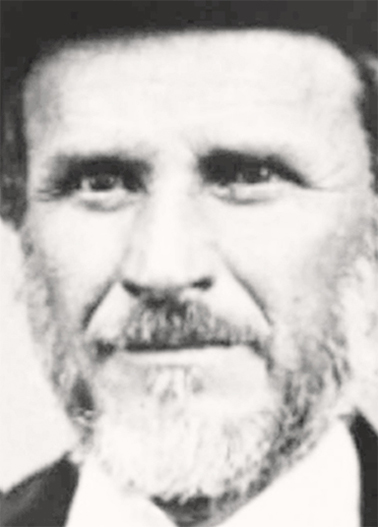
Cayetano de la Garza
Even though the path between Las Lajas Ranch and Laredo was fraught with danger, Cayetano risked his life to save his family, his community, and the city of Laredo, which his ancestor had founded. For this, he earned the nickname “the Paul Revere of Laredo.”
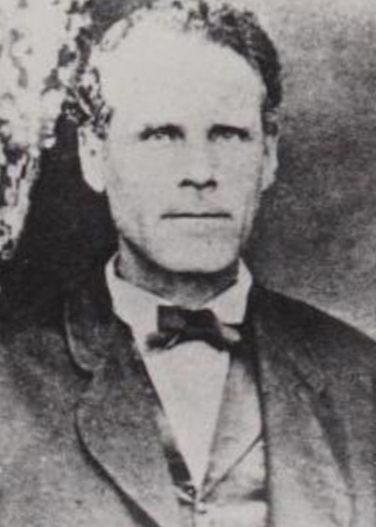
Lázaro de la Garza
Cayetano’s brother, Lázaro de la Garza, was appointed County Judge in 1867. He wrote regular reports, now preserved in the Texas Historical Archives, informing the Governor of Texas of the devastating toll of indigenous raids along the border. Raiding parties, bands of outlaws, military platoons and even paramilitary groups were just a few of the dangers of frontier life during these times, and underscore the risks that Cayetano assumed in his daring ride from Las Lajas Ranch to Laredo.
THE 20TH CENTURY
The 20th century saw the stewards of Las Lajas Ranch engaged in public life well beyond the ranch’s borders. The legacy ranches of South Texas played an influential role in the hotly-contested 1948 Democratic Senate primary that launched Lyndon B. Johnson’s national career and would eventually produce landmark civil rights legislation.
The place to get those precious new votes was from the [ranching] kingdoms of South Texas.
— Stephen Harrigan, Big Wonderful Thing: A History of Texas
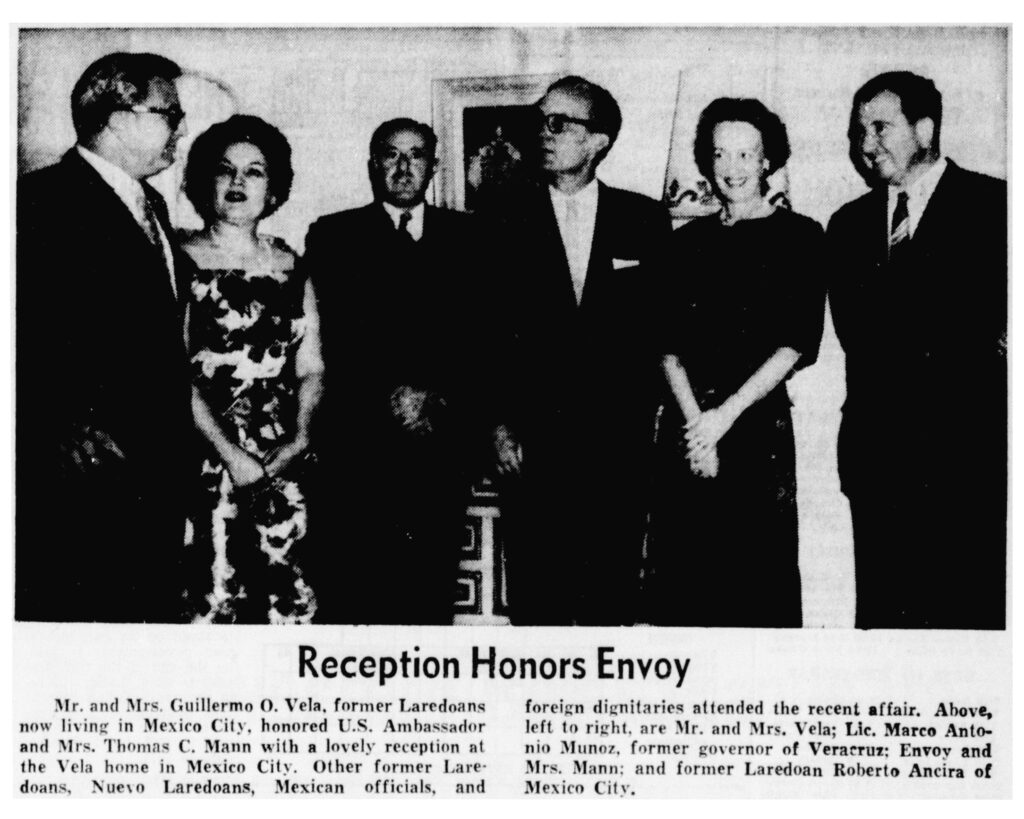
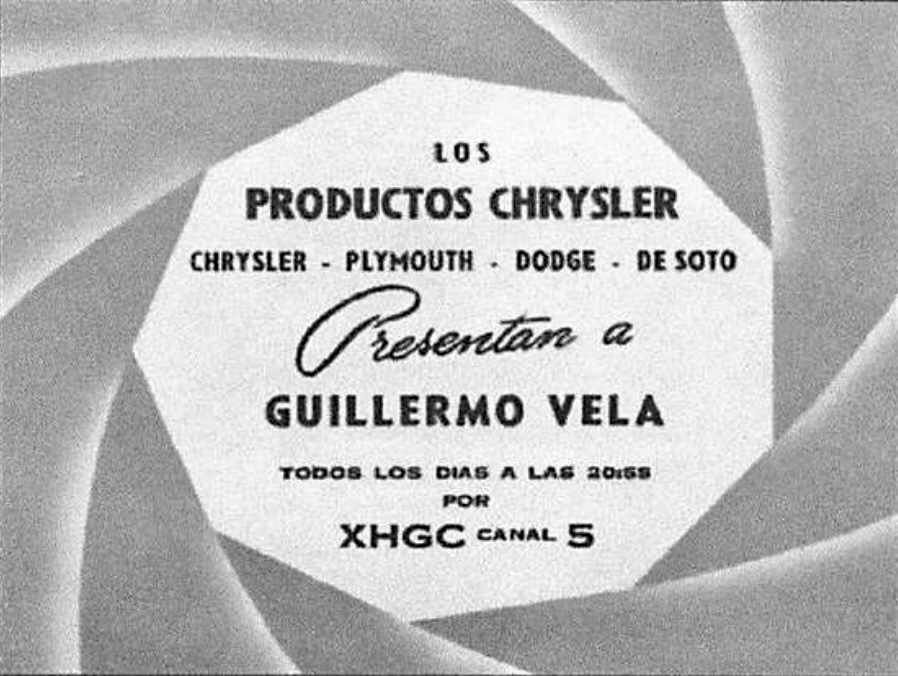
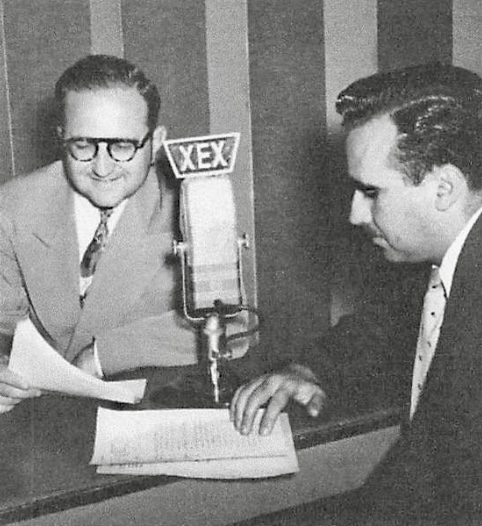
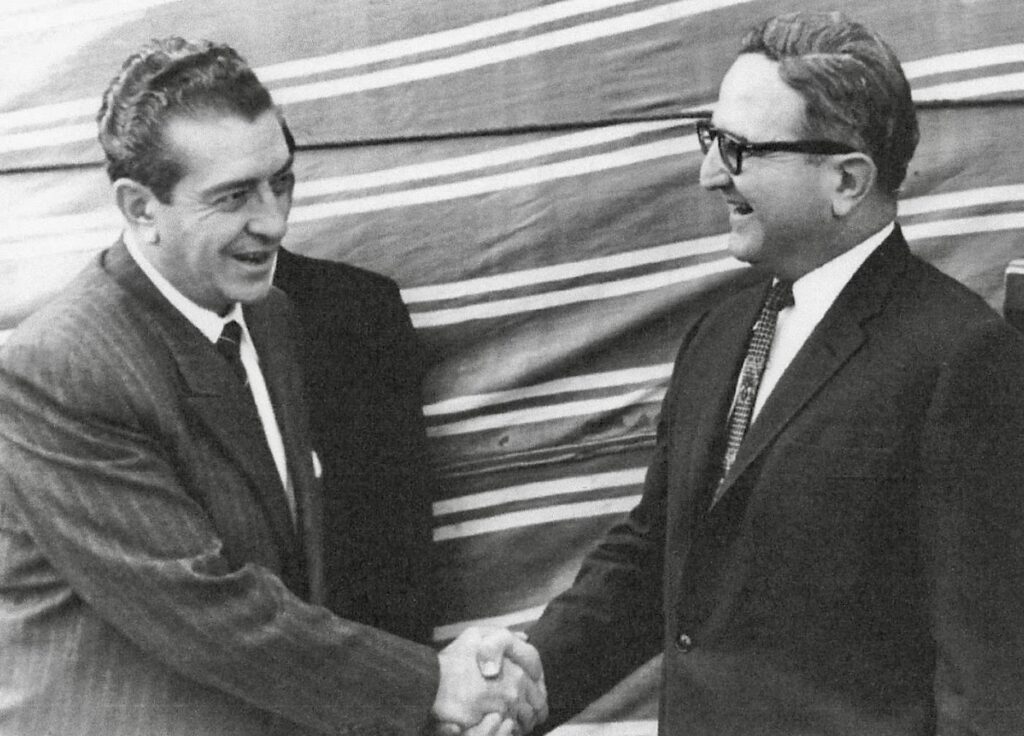
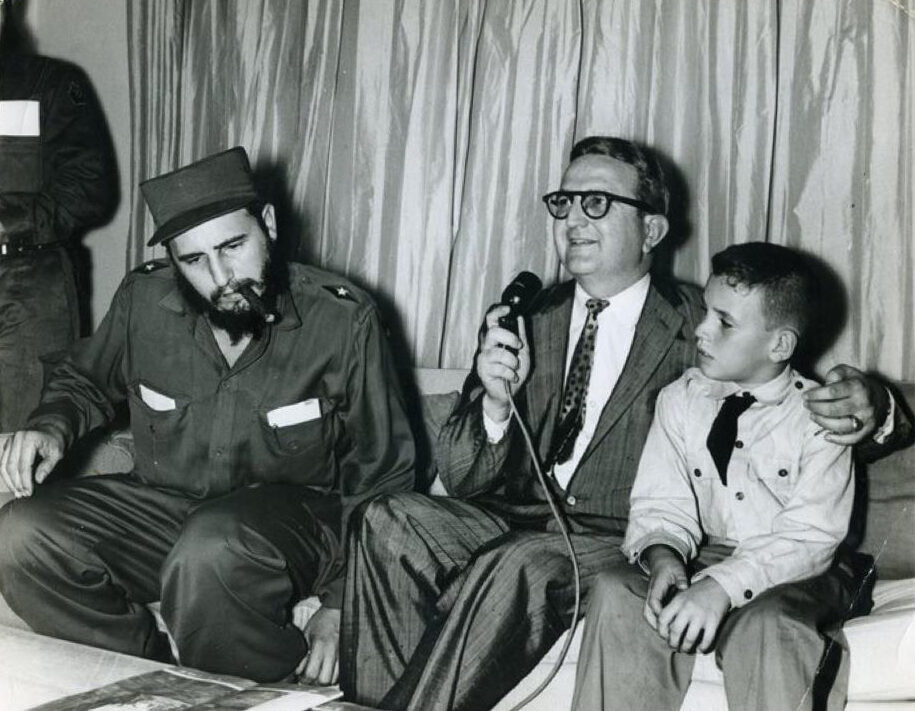
This tradition of leadership continued during the Cold War with Guillermo Vela. An American military captain, diplomat, entrepreneur, and the first radio and television news commentator in Latin America, Guillermo was instrumental in the United States’ efforts to combat the spread of Communism during one of the hemisphere’s most volatile periods.
His catchphrase, buenas noches . . . muy buenas noches, a usted, was heard nightly by millions of viewers and listeners across the western hemisphere. Translated loosely as good evening . . . a very good evening indeed, to you, it became an unmistakable calling card for which he is remembered to this day.
Las Lajas Ranch owner, Guillermo Vela, reporting live from Mexico City on the appointment of William O’Dwyer as U.S. Ambassador to Mexico. August 16, 1950.
NYC Municipal Archives, WNYC Collection.
WNYC Archives ID: 69207.
Municipal Archives ID: LT406.
Below: Announcement for nightly Chrysler-sponsored newscast featuring Guillermo Vela; Preparing for a radio broadcast; Meeting with Mexican President Adolfo Lopez Mateos; Interviewing historical military figure in connection with the Cuban Revolution.
LOOKING TO THE FUTURE
The original site of the Las Lajas compound may have been lost to the Falcon International Reservoir, but its spirit as one of the oldest working legacy ranches in the United States is as strong and vibrant as ever.
Las Lajas proudly contributes to the nation’s agricultural heritage and food security today as it has for over two centuries. And from its present headquarters on higher ground, the ranch continues to extend true South Texas hospitality to dignitaries, artists, bohemians, business leaders, and seekers of solitude and adventure, all drawn to a landscape teeming with beauty and history.
As it turns out, then, the story of Las Lajas Ranch is not as much about land as it is about people. It is the story of ten generations of riders and ranchers, diplomats and reformers, cattlemen, cattlewomen, and caretakers who have shaped and been shaped by this incredible place.
And just as importantly, it is the story of our many remarkable visitors—visitors like you, who over the years have sought respite, renewal, and adventure here—arriving as guests, leaving as friends, and deepening the culture of Las Lajas by their company.
Anchored in the past, engaged with the present, yet always looking ahead, Las Lajas Ranch is a place with a story that’s still unfolding.
We cordially invite you to be part of its next chapter.
Thank you for your interest in Las Lajas Ranch. Please fill out the form below if you have questions about the ranch or our availability, or to receive information about our forthcoming direct to consumer beef and game offerings!